How to Create a Plinko Game Online: From Concept to Reality
Author
Date Published

You're watching the colorful chips bounce down the pegs on your favorite sweepstakes casino, mesmerized by the satisfying randomness of Plinko. Suddenly, a thought strikes you: "I wonder how hard it would be to create a Plinko game online myself?" Whether you're a curious developer or an entrepreneur eyeing the sweepstakes gaming market, building your own version of this classic game is more achievable than you might think.
Create a Plinko game online and you'll join the ranks of successful platforms like Stake.us (which offers 250,000 GC + 25 SC on signup) and Crown Coins Casino (1,600,000 GC + 100 SC welcome bonus). The physics-based gameplay that makes Plinko so addictive relies on surprisingly straightforward programming concepts, though the devil lies in the details.
Understanding the Mechanics: How Plinko Actually Works
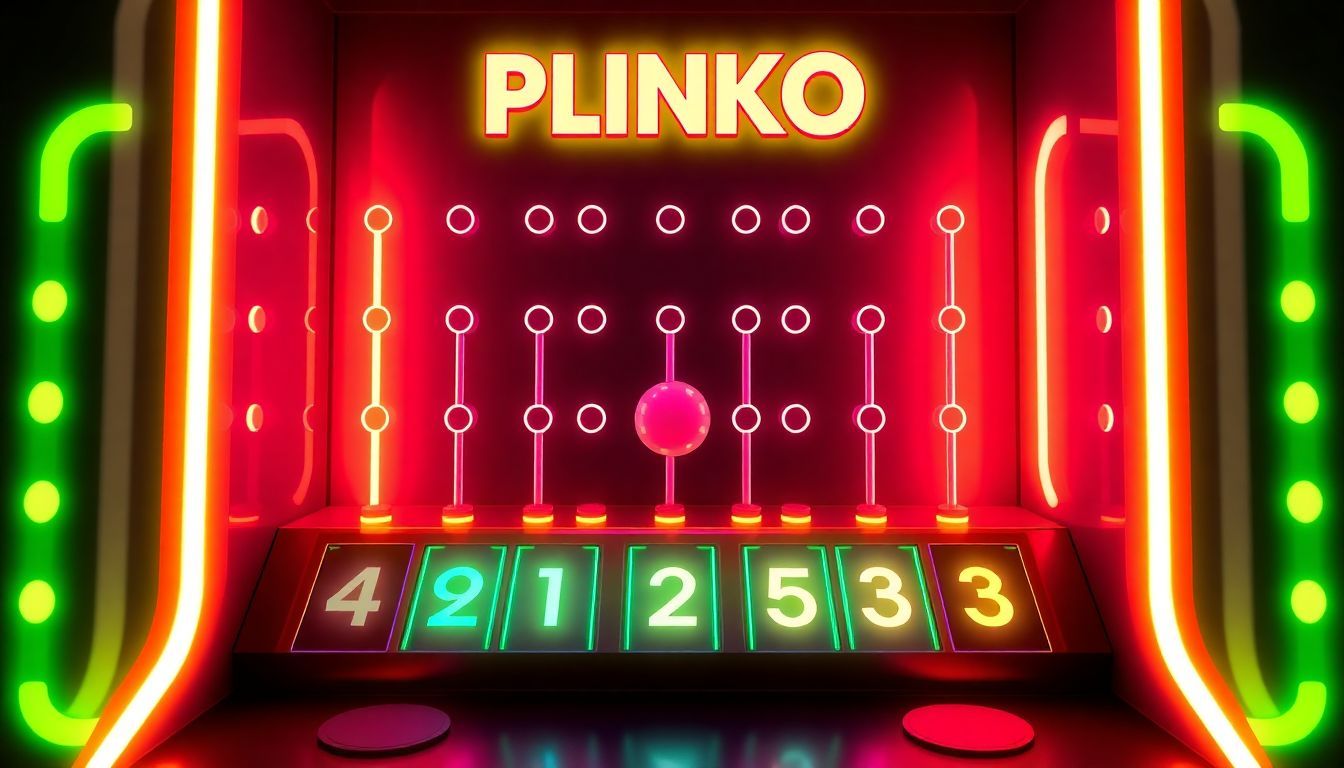
Before you create a Plinko game online, you need to grasp what makes this game tick. At its core, Plinko simulates gravity and collision physics. A chip drops from the top, bounces off strategically placed pegs, and eventually lands in one of several slots at the bottom – each with different payout values.
The magic happens in the random number generation (RNG) system. Legitimate sweepstakes casinos like McLuck (which provides 7,500 GC + 2.5 SC free) use certified RNG algorithms that ensure fair outcomes. Your homemade version needs similar integrity, even if you're building it for educational purposes.
Physics engines like Box2D or Matter.js handle the realistic bouncing behavior. These libraries calculate gravitational pull, collision angles, and momentum transfer automatically. The chip's path appears random to players, but it's actually governed by precise mathematical calculations.
Here's the surprising part: most developers overcomplicate the peg interaction. Simple circular collision detection works perfectly fine. You don't need advanced physics modeling to create convincing gameplay. Pulsz Casino's version (offering 5,000 GC + 2.5 SC) proves that elegant simplicity often trumps complex mechanics.
Essential Components for Your Plinko Engine
The foundation requires four core elements: the drop mechanism, peg collision system, physics simulation, and payout calculation. Your drop mechanism determines where chips enter the playing field. Most implementations allow horizontal positioning along the top edge, giving players a sense of control over their fate.
Peg collision detection makes or breaks the experience. Each peg acts as a circular object that deflects incoming chips. The deflection angle depends on impact location and incoming velocity. Getting this right creates the satisfying unpredictability that keeps players engaged at sites like WOW Vegas (1,500,000 GC + 34.5 SC welcome offer).
Physics simulation handles gravity, friction, and momentum. Your chip needs realistic weight and bounce characteristics. Too bouncy feels fake; too heavy seems sluggish. Finding the sweet spot requires extensive testing and tweaking.
Programming Languages and Frameworks
JavaScript dominates web-based Plinko development due to its versatility and browser compatibility. Canvas API or WebGL provide the rendering foundation, while libraries like Three.js enable smooth animations. Chumba Casino's polished interface demonstrates what's possible with JavaScript optimization.
For mobile apps, Unity offers cross-platform deployment with built-in physics engines. Swift (iOS) or Kotlin (Android) work for native development but require separate codebases. Python with Pygame suits prototyping and educational projects, though performance limitations prevent commercial deployment.
The contrarian take? Server-side languages like Node.js can handle game logic while sending results to lightweight front-end displays. This approach prevents client-side manipulation but increases latency. High 5 Casino likely uses similar architecture for their skill-based games.
Technical Implementation: Building Your Plinko Game Step by Step
Creating a Plinko game online starts with establishing your development environment. Choose your tech stack wisely – it determines everything from performance capabilities to deployment options. Most successful implementations begin with HTML5 Canvas or WebGL for browser compatibility.
Set up your coordinate system first. Standard approach places origin (0,0) at the top-left corner, with y-values increasing downward. This matches natural drop behavior and simplifies gravity calculations. Your playing field typically measures 800x600 pixels minimum for decent visibility.
Peg placement follows specific patterns for optimal gameplay. Triangular arrangements create the most interesting bounce patterns, while rectangular grids feel predictable and boring. Hello Millions spaces their pegs approximately 60 pixels apart horizontally and 80 pixels vertically for ideal chip flow.
The chip object needs position, velocity, and rotation properties. Start with simple circles before attempting complex shapes. Radius should be roughly 30% of peg spacing to ensure proper collision detection. Mass affects bounce behavior – heavier chips move more predictably through the peg field.
Gravity implementation requires constant downward acceleration. Standard value: 500 pixels per second squared. This creates realistic falling speed without excessive bounce velocity. Some developers add air resistance for more natural movement, though it's optional for basic implementations.
Collision Detection Algorithms
Circle-to-circle collision detection powers most Plinko games. Calculate distance between chip center and peg center, compare to sum of radii. If distance is less than radius sum, collision occurred. This method handles 99% of interactions efficiently.
Advanced implementations use continuous collision detection to prevent chips from "tunneling" through pegs at high speeds. This technique predicts collision points between frames rather than checking positions after movement. Legendz Casino's smooth gameplay suggests they've mastered this approach.
Response calculations determine post-collision behavior. Simple reflection works: reverse the velocity component perpendicular to collision surface. Add slight randomization (±5 degrees) to prevent deterministic patterns that players might exploit.
Performance optimization matters more than you'd expect. Running collision checks every frame for multiple simultaneous chips can bog down browsers. Spatial partitioning or broad-phase detection reduces computational load by eliminating impossible collisions early.
Randomization and Fairness Systems
True randomness doesn't exist in computer systems, but cryptographically secure pseudo-random number generators provide adequate unpredictability. JavaScript's Math.random() function suffices for casual projects, though casino-grade implementations require stronger algorithms.
Provably fair systems let players verify game integrity using cryptographic hashes. Each round generates a unique seed value that determines outcomes. Players can replay the exact same physics simulation to confirm results weren't manipulated. Stake.us pioneered this transparency approach in sweepstakes gaming.
Some developers add subtle influence to pure physics simulation. Slight peg positioning adjustments or velocity modifications can nudge overall return-to-player percentages toward target values. This "assistance" remains invisible to players while ensuring mathematical house edges.
Surprisingly, pure physics simulation often produces unsatisfying results. Real-world irregularities create more interesting gameplay than perfect mathematical precision. Adding tiny random forces or peg position variations improves player engagement significantly.
Common Misconceptions About Plinko Game Development
Creating a Plinko game online seems deceptively simple until you encounter the hidden complexities. The biggest misconception? That physics engines automatically create engaging gameplay. Raw physics simulation often produces boring, predictable patterns that fail to maintain player interest.
Many developers assume visual complexity equals better gameplay. Elaborate graphics and fancy animations can actually detract from core mechanics. Crown Coins Casino's clean, straightforward Plinko design proves that elegant simplicity often outperforms flashy alternatives. Players focus on the bouncing action, not background decorations.
Another common myth: more pegs always create better randomization. Excessive peg density can actually reduce outcome variety by limiting chip movement paths. Strategic peg placement with adequate spacing generates more interesting bounce patterns than densely packed arrangements.
The "Easy Money" Fallacy
Building a functional Plinko game takes days; creating a commercially viable version requires months. Balancing physics parameters, implementing fair randomization, and optimizing performance across devices demands extensive iteration. McLuck didn't achieve their smooth 7,500 GC + 2.5 SC experience overnight.
User interface design proves more challenging than core game logic. Mobile touch controls need precise calibration for accurate chip positioning. Desktop mouse interactions require different sensitivity settings. Cross-platform compatibility testing consumes significant development time.
Monetization mechanics add another layer of complexity. Sweepstakes casinos like Pulsz (5,000 GC + 2.5 SC welcome bonus) integrate sophisticated reward systems, social features, and retention mechanisms. Your simple physics game needs these elements to compete effectively.
Physics vs. Predetermined Outcomes
Pure physics simulation doesn't guarantee specific return-to-player percentages. Real-world Plinko machines in casinos use predetermined outcome tables rather than true physics. This ensures mathematical house edges while maintaining the illusion of random bouncing.
Sweepstakes platforms face similar challenges. WOW Vegas must provide fair gameplay while maintaining sustainable business models. Hybrid approaches combine physics simulation with outcome adjustment algorithms. Chips still bounce realistically, but subtle influences guide results toward target distributions.
The contrarian reality: players often prefer slightly manipulated physics over pure randomization. Completely random outcomes can produce long losing streaks that feel unfair. Subtle balancing creates more satisfying win/loss patterns while preserving gameplay authenticity.
Practical Implications for Sweepstakes Casino Players
Understanding Plinko development illuminates how sweepstakes casinos operate their games. When you create a Plinko game online, you realize the intricate balance between randomness and controlled outcomes that platforms like Hello Millions must maintain.
Legitimate sweepstakes casinos use certified random number generators and undergo regular audits. However, your DIY Plinko project won't have these safeguards. This knowledge helps you appreciate the rigorous testing that reputable sites endure to earn player trust.
Game speed affects your Gold Coin and Sweeps Coin consumption rates. Faster animations encourage rapid play, while slower bouncing creates anticipation. High 5 Casino's deliberately paced gameplay encourages thoughtful betting decisions rather than impulsive rapid-fire sessions.
Recognizing Quality Implementations
Professional Plinko games exhibit smooth animations, consistent physics behavior, and responsive controls. Chips should bounce naturally without obvious scripted movements. Laggy performance or jerky animations suggest poor optimization or outdated technology.
Legitimate platforms display game statistics and RTP (Return to Player) information. Chumba Casino provides detailed game mechanics explanations, while questionable sites avoid transparency. Your development experience teaches you to spot these quality indicators.
Pay attention to collision detection accuracy. Chips should interact realistically with pegs rather than passing through or sticking unexpectedly. Precise physics simulation requires significant programming effort – shortcuts become obvious during gameplay.
Making Informed Platform Choices
Development insights help you evaluate sweepstakes casino offerings more critically. Stake.us (250,000 GC + 25 SC) invests heavily in game quality, evident in their smooth Plinko implementation. Comparing multiple platforms reveals which operators prioritize player experience over quick profits.
Understanding technical limitations explains why some features exist or don't. Mobile battery drain from intensive graphics processing leads platforms to optimize visual elements. Knowing these constraints helps set realistic expectations for gameplay experiences.
Server-side versus client-side processing affects gameplay responsiveness. Local processing provides immediate feedback but enables potential manipulation. Server-side calculations ensure fairness but introduce latency. Recognizing these trade-offs improves your platform evaluation skills.
Advanced Features and Monetization Strategies
Creating a Plinko game online opens doors to innovative gameplay mechanics beyond basic chip dropping. Multi-chip simultaneous play increases excitement and betting options. Legendz Casino's implementation allows up to five chips per round, multiplying win potential and engagement levels.
Progressive jackpot integration transforms simple bouncing into potentially massive payouts. Designated slots trigger accumulating prize pools that reset after wins. This feature requires careful mathematical modeling to ensure sustainable payout rates while maintaining player interest.
Skill-based elements can supplement pure chance mechanics. Timing-based chip releases or peg manipulation abilities introduce player agency. However, sweepstakes regulations limit skill components to maintain legal compliance across US states.
Social Gaming Integration
Multiplayer Plinko tournaments create competitive experiences that boost engagement. Players compete for leaderboard positions using identical chip drop sequences. Crown Coins Casino (1,600,000 GC + 100 SC) hosts regular tournaments that demonstrate social gaming's retention power.
Achievement systems reward consistent play and milestone reaches. Badges for consecutive wins, total chips dropped, or specific slot hits encourage continued participation. These psychological hooks prove more effective than pure monetary incentives for long-term engagement.
Sharing mechanics let players broadcast big wins or interesting bounce patterns. Social media integration expands your game's reach while providing authentic user-generated marketing content. Viral sharing potential justifies development investment in social features.
Analytics and Optimization
Player behavior tracking reveals optimization opportunities invisible during development. Heat maps show preferred chip drop locations, while session duration data indicates engagement sweet spots. WOW Vegas uses similar analytics to refine their 1,500,000 GC + 34.5 SC experience continuously.
A/B testing validates game mechanic changes before full deployment. Experiment with peg spacing, payout distributions, or visual elements using controlled player groups. Data-driven decisions outperform intuitive game design assumptions consistently.
Revenue optimization requires balancing player satisfaction with business sustainability. Generous payouts increase engagement but reduce profitability. Finding optimal equilibrium points demands extensive testing and mathematical modeling expertise.
Related Topics and Further Development Paths
Creating a Plinko game online introduces you to broader game development concepts applicable to other casino-style games. Physics simulation skills transfer directly to pachinko, pinball, and ball-based puzzle games. The mathematical frameworks underlying fair randomization apply universally across gaming applications.
Exploring other Pragmatic Play titles like Sweet Bonanza or Gates of Olympus reveals alternative approaches to engaging gameplay mechanics. These slots combine skill elements with chance outcomes, providing inspiration for Plinko variations that maintain sweepstakes compliance.
Blockchain technology offers intriguing possibilities for provably fair gaming. Smart contracts can execute transparent randomization protocols that players verify independently. This emerging field represents the future direction of online gaming transparency and trust.
Expanding Game Portfolio
Dice games share mathematical foundations with Plinko development. Creating online craps or Yahtzee variants requires similar probability calculations and random number generation techniques. These skills compound as you build comprehensive gaming platforms.
Card game development introduces different challenges around shuffle algorithms and hand evaluation. Blackjack or poker implementations teach state management and complex rule enforcement. The programming patterns learned from Plinko provide foundational knowledge for these advanced projects.
Slot machine creation represents the natural evolution from Plinko development. Reel spinning mechanics, symbol matching algorithms, and bonus feature triggers build upon physics simulation and randomization concepts. Nolimit City's innovative slot designs showcase creative possibilities within sweepstakes frameworks.
Regulatory Considerations
Sweepstakes gaming operates within specific legal parameters that affect game design decisions. Understanding these regulations helps you create compliant entertainment rather than inadvertent gambling applications. McLuck's successful 7,500 GC + 2.5 SC model demonstrates proper regulatory navigation.
Different states maintain varying laws regarding online gaming activities. Your Plinko implementation must consider these jurisdictional differences if you plan public deployment. Legal consultation becomes essential for commercial ventures beyond educational projects.
International markets present additional complexity layers. European gambling regulations differ significantly from US sweepstakes rules. Global deployment requires comprehensive legal research and adaptive game mechanics that satisfy multiple regulatory frameworks simultaneously.
The journey from concept to finished product reveals why established platforms like Pulsz (5,000 GC + 2.5 SC) invest heavily in professional development teams. Creating a simple Plinko game teaches fundamental concepts, but building a sustainable gaming platform demands expertise across multiple disciplines. Your educational project provides valuable insights into this fascinating intersection of technology, psychology, and entertainment.

Learn to create your own Plinko game online with modern web tools. Understand physics, RNG systems, and design strategies used by top sweepstakes casinos.

Master Plinko game online at top sweepstakes casinos. Learn strategies, find best bonuses, and discover why this bouncing ball game creates addictive fun.
Complete Plinko guide for sweepstakes casinos. Learn rules, strategy, RTPs, and find the best sites offering Plinko with exclusive bonuses.